
Art and paintings auctions in the UK cover everything from a single dedicated pictures-and-prints sale to broad fine art auctions where oils and watercolours share a catalogue with silver, ceramics and jewellery. You can bid in the room, by telephone, by absentee (commission) bid, or live online through platforms such as Easy Live Auction and the-saleroom. Just remember the hammer price isn’t the total: a buyer’s premium (commonly around 20–30% plus VAT on the premium) sits on top, so factor it in before you raise your paddle.
This guide covers what actually comes up, how specialist sales differ from general ones, the costs, how to bid, what to check on a painting first, and where to find live catalogues on Auction Eagle. For the running calendar, keep the Art & Paintings auctions hub to hand — it always shows what’s coming up.
What sells at art & paintings auctions in the UK?
More than you might think. Oil paintings and watercolours are the backbone, but the category stretches to limited-edition and open prints, posters, drawings, sculpture and decorative wall art. At the accessible end you’ll find contemporary originals and reproduction prints; at the top end, signed works with solid provenance. A typical mixed sale might list a bold contemporary coastal seascape by a living painter next to a Jack Vettriano “Table for One” reproduction print and an A3 film poster — three very different price points under one roof.
If you’re new to how the numbers are set, our explainer on how auction estimates work is worth ten minutes before you start.
How do specialist paintings sales differ from general fine art sales?
A specialist Paintings and Prints sale is catalogued by someone who lives and breathes pictures. Attributions are tighter, condition notes are fuller, and the lots are grouped so you can compare like with like. Sales like the Paintings and Prints Auction from Halls | The Auction House in Shrewsbury, Shropshire, are aimed squarely at picture buyers and run both online and in person.
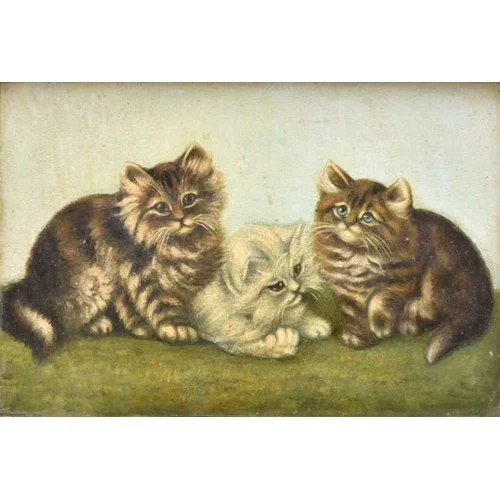
A general Fine Art & Antique sale mixes pictures with furniture, ceramics, silver and jewellery. Pictures can slip through with less competition here, which is why bargain-hunters watch them closely — though you do more of the homework yourself. Sales like the Fine Art & Antique Sale at Jefferys Auctions in Lostwithiel, Cornwall — with online viewing and bidding open to buyers across Devon and the wider South West — bundle Oriental and English ceramics, Georgian to Edwardian furniture, jewellery, silver and pictures into one catalogue.

Estate and house-clearance sales sit between the two — fresh-to-market material with real stories behind it. A single-owner offering like the fine art estate sale at Chalkwell Auctions in Essex pulls together paintings, Oriental pieces, jewellery, interiors and curiosities — the sort of mix where an unregarded picture can surface.

How much does it cost to buy art at auction?
Three figures matter. The hammer price is what your winning bid is knocked down at. The buyer’s premium is the house’s commission on top — rates vary, but around 20–30% plus VAT on the premium is normal. Then there are extras: online-platform surcharges (often 3–5%), and shipping or collection, which for larger framed works can cost more than you expect.
- Always read the individual sale’s terms — premium and fees differ between houses.
- Set a ceiling that includes premium and VAT, not just the hammer.
- Ask about packing and postage before you bid on anything glazed or large.
For the bigger picture on how the trade is behaving, our UK auction market report tracks the trends.
How do I bid on art at a UK auction?
Register first — you’ll give ID and card details, whether in the room or online. Then choose your method:
- In the room: collect a paddle and bid live. Best for judging condition in the flesh.
- Online live: bid in real time via Easy Live Auction or the-saleroom, watching the auctioneer on stream.
- Absentee (commission) bid: leave your maximum and the house bids up to it on your behalf.
- Telephone: a staff member calls you to bid live on higher-value lots.
If a picture doesn’t reach its confidential minimum, it won’t sell — that floor is the reserve. Our guide to what a reserve price means explains how it interacts with the estimate.
What should I check before bidding on a painting?
Condition first. View in person or ask for a full condition report and extra photographs under raking light. Look for craquelure, flaking, past retouching (visible as darker patches), relining on the back, tears, foxing on works on paper, and water staining. On prints, confirm whether it’s an original limited edition or an open reproduction — the wording matters enormously to value.
Then read the catalogue verbs carefully: “signed” is stronger than “bears signature”; “attributed to” and “in the manner of” mean the house is not guaranteeing the hand. Check the frame is included, measure the work against your wall, and factor reframing into your budget.
Where can I find art & paintings auctions near me?
Start at the Art & Paintings auctions hub, which lists the live calendar UK-wide, then filter by region. Popular regional hubs include Art & Paintings auctions in London, Lancashire, Devon and Scotland. To browse by saleroom instead, use the directory of every UK auction house.
Houses that regularly list pictures and mixed fine art on Auction Eagle include:
- William George — Stamford, Lincolnshire
- Marsh Barton auctions — Exeter
- Walton & Walton — Burnley, Lancashire
- Swan Fine Art — near Thame, Oxfordshire
- Bulstrodes Auctions — Christchurch
- PSP Auctions — Buckingham
- Hansons Auctioneers & Valuers — Hertfordshire
- Southgate Auction Rooms — London
What typically comes up in these sales?
Original paintings and works on paper
This is the heart of the category — a dramatic contemporary coastal seascape with crashing waves by a living painter, alongside decorative prints and posters. Reproduction prints such as a Jack Vettriano “Table for One” bring his instantly recognisable mood at a fraction of an original’s cost, while a Quadrophenia alternative movie poster shows how film and music imagery has become genuinely collectable.
Sculpture and decorative figures
Three-dimensional art turns up often. A contemporary bronzed sculpture of Nyx, goddess of night, is the kind of statement piece that photographs beautifully, while resin fantasy fairy and unicorn figurines feed a steady, affordable collecting market.
The wider fine art mix
Because pictures share catalogues with everything else, expect ceramics like a set of Palissy Pallanza earthenware or an Aynsley bone china ginger jar; West German carriage and mantel clocks; classic cameras such as a Rollei 35 SE and an antique Instantograph field camera by Archer & Sons of Liverpool; militaria including World War II campaign medals and a brass artillery shell casing; a Wade Vat 69 whisky advertising jug; and Osmiroid calligraphy fountain pens. If it’s the pottery that tempts you, our ceramics & porcelain buyer’s guide goes deeper.
A first-time buyer’s checklist
- Register early and confirm the sale’s buyer’s premium and any online surcharge.
- View in person or request a written condition report plus extra photos.
- Confirm original versus reproduction, and check the signature wording.
- Measure the work and the frame; budget for reframing and delivery.
- Set a hard ceiling that already includes premium and VAT.
- Check collection deadlines — storage charges can start quickly.
Your next step on Auction Eagle
Browse the Art & Paintings auctions hub for the current calendar, follow the houses whose stock suits your taste, and check back often — good pictures come round more regularly than you’d guess. New to the site? Start from the Auction Eagle home page and let the regional hubs point you to the next sale near you.
Frequently Asked Questions
What fees do you pay when buying art at a UK auction?
You pay the hammer price plus a buyer's premium, commonly around 20–30% plus VAT on the premium. Online bidding often adds a 3–5% platform surcharge, and you cover collection or shipping. Rates vary by house, so read each sale's terms first.
How do I bid on paintings at auction in the UK?
Register with the auction house, then bid in the room with a paddle, live online via Easy Live Auction or the-saleroom, by telephone, or by leaving an absentee (commission) bid up to your maximum. All methods need ID and card details in advance.
What sells at art and paintings auctions in the UK?
Oil paintings, watercolours, drawings, limited-edition and reproduction prints, posters and sculpture. General fine art sales also mix in ceramics, silver, jewellery, clocks, cameras and militaria alongside the pictures.
What's the difference between a specialist paintings sale and a general fine art sale?
A specialist paintings-and-prints sale is catalogued by a pictures expert, with tighter attributions and fuller condition notes. A general fine art sale mixes pictures with furniture and antiques, so competition can be lower but you do more of the research yourself.
How can I check the condition of a painting before bidding?
View it in person or request a written condition report with extra photographs. Look for flaking, retouching, relining, tears and foxing, and confirm whether a print is an original limited edition or an open reproduction.
Where can I find art and paintings auctions near me?
Use Auction Eagle's Art & Paintings auctions hub for the live UK-wide calendar, then filter by region such as London, Lancashire, Devon or Scotland, or browse the full directory of UK auction houses.


